So today we had a political atomic bomb with the revelation of the electoral fraud of last Sunday. On the face of it we may not see any major change: after all this is a dictatorship so who cares about how many votes the dictator got? And yet, if we do not know where the bomb truly hit we are seeing debris falling all around us. In fact, a mist so thick in dust that many are losing their way.
Chavismo gave the extremely predictable answer.
Showing posts with label cne. Show all posts
Showing posts with label cne. Show all posts
Thursday, August 03, 2017


Tuesday, March 21, 2017
Actually, is a split in Venezuelan opposition unavoidable?
I was musing about the opposition divisions becoming more intractable. And they are.
 What makes me think the opposition alliance, MUD, will divide is paradoxically, in a way, an editorial of Rafael Poleo in his magazine Zeta where he attacks Diego Arria (not available on line). Whether Poleo is right in his assessment is irrelevant to our discussion. What is relevant is his vehemence against Diego Arria and what he supposedly represents.
 What makes me think the opposition alliance, MUD, will divide is paradoxically, in a way, an editorial of Rafael Poleo in his magazine Zeta where he attacks Diego Arria (not available on line). Whether Poleo is right in his assessment is irrelevant to our discussion. What is relevant is his vehemence against Diego Arria and what he supposedly represents.
Wednesday, July 20, 2016
Recalling the recall
The news today, allegedly good, is that the CNE would have recognized that the 1% per state required signatures to call for a collection of a 20% required signatures to call for a recall election has been reached. Already from this sentence you know that the Recall Election this year is far from a sure thing. In fact, no matter what this tweet of Ocariz says, the date of a recall election is not going to be set before the January 2017 deadline after which the recall election is deemed useless (1).
Aquí está el acta que confirma los resultados de la validación por el CNE. Esperamos fecha para el 20% pic.twitter.com/dBB4rL0JM4— Carlos Ocariz (@CarlosOcariz) 20 de julio de 2016
Monday, December 14, 2015
The 2015 election: final review
The good thing about landslides is that detailed study of vote movement is not necessary nor possible since the anger vote is difficult to assess and predict for the future. In democratic countries this is not really an issue: Mauritius had once a 100% district parliament win fort a single party and it never stopped being a democracy. Thus after reviewing the highlights we may try to summarize the whole thing.
Friday, April 10, 2015
Fake signatures in lieu of votes, popular clamor in lieu of democracy
So Maduro will present 10 or 13 or 3 million signatures in Panama today. To Obama, to the public or to the dumpster. Does it matter?
The shame has continued unabated. Even my personal one. I have almost forced my S.O., a sickly public worker, to go an sign the Maduro farce in a way to be seen by his co-workers, to make sure he does not raise any suspicion at work, to make sure he does not compromise his job, to make sure he does not risk his health insurance. We are not proud but we live in a dictatorship. I can afford not to sign, he cannot because my means do not allow me to support him financially 100%, the more so that the bolivarian revolution is homophobic and contrary to many other LatAm countries has no provision for same sex couples so I cannot put him on my insurance, my retirement, my inheritance, etc. In many other countries there are such possibilities now, but bolivarian Venezuela is probably the most backward country now in South America. Then again homophobia is but one of the many tools of subjection available to fascism.
But my personal shame made me digress.
 |
| Sending the message that votes are unnecessary |
The shame has continued unabated. Even my personal one. I have almost forced my S.O., a sickly public worker, to go an sign the Maduro farce in a way to be seen by his co-workers, to make sure he does not raise any suspicion at work, to make sure he does not compromise his job, to make sure he does not risk his health insurance. We are not proud but we live in a dictatorship. I can afford not to sign, he cannot because my means do not allow me to support him financially 100%, the more so that the bolivarian revolution is homophobic and contrary to many other LatAm countries has no provision for same sex couples so I cannot put him on my insurance, my retirement, my inheritance, etc. In many other countries there are such possibilities now, but bolivarian Venezuela is probably the most backward country now in South America. Then again homophobia is but one of the many tools of subjection available to fascism.
But my personal shame made me digress.
Thursday, April 10, 2014
Comunicado de la MUD sobre las elecciones anunciadas para San Cristóbal y San Diego
En el día de hoy la señora Tibisay Lucena ha anunciado que el CNE convocará a elecciones para nuevos alcaldes en San Cristóbal y San Diego. Con toda responsabilidad la Mesa de la Unidad Democrática no reconocerá dichas elecciones y hará todo cuanto esta en su poder para evitarlas.
La señora Tibisay Lucena peca de dos maneras graves en su anuncio.
La señora Tibisay Lucena peca de dos maneras graves en su anuncio.
Sunday, April 07, 2013
The CNE forbade this ad on electoral fraud by chavismo
The Venezuelan electoral board this week forbade transmission of this political add that clearly makes allusion to the scare tactics that chavismo uses to force people to vote for them. Do not be surprised by this: that interdict is all but an open confession by the CNE that it is just the mere election ministry of the regime.
Tuesday, March 19, 2013
The electoral umpire
 Rayma, cartoonist of El Universal, has a deadly cartoon today that explains best than anything what a bunch of cheats the CNE is (Venezuela electoral board). For those who do not know anything about Soccer/Football (England) I will explain after the jump (you are about half of the readership after all).
By the way, Tibisay was outraged by the words of USA Roberta Jacobson at the State Department, who was merely stated what we all know. But Tibisay seems not aware that we call her the Minister for Elections of Chavez.
Sunday, March 10, 2013
Why Capriles needs to think about it
Capriles did this tweet a few minutes ago:
where he tells us that his decision will be announced this evening. Why? (1)
Muchas gracias por los miles de mensajes,los valoro todos,esta noche le hablaré al país sobre mi decisión,que Dios los bendiga
— Henrique Capriles R. (@hcapriles) March 10, 2013
where he tells us that his decision will be announced this evening. Why? (1)
Thursday, November 01, 2012
Some days I want to cover the elections and most days I do not want to
I wrote a single post on the December regional elections hinting that I may not want to cover further than what I did, silly arithmetic prediction included. But the debacle in the chavistas candidate "nomination" process is so tempting... then again the ongoing slow motion suicide of the opposition keeps apace so why bother covering what may be the final set up of the totalitarian regime of Chavez whose end can only come through open rebellion? Started by chavistas themselves, mind you!
Let's start with the chavista mess.
Let's start with the chavista mess.
Monday, October 29, 2012
Electoral garbage in Venezuela
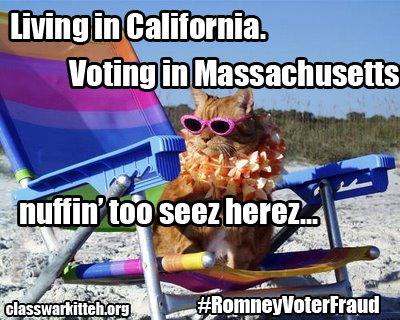
By not being an electoral prude I mean that for political reasons some concessions can be made when someone decides to run for office in a district that it is not the one they live in. You may have been born there, you may live next door to it, your children go to school there, you may have a special connection there for X, Y or Z reason. Thus even if you are not registered there there may be a reason, a valid reason, for you to run there.
Socorro Hernandez, otra excepcional carta abierta
 |
| Retratos de Bolívar por doquier, pero ¿se honra su moralidad? |
Pero tengo que escribirte porque tienes mucha suerte a pesar de todo. En tu debacle de la semana pasada parece que todos se olvidaron de tus travesuras en el 2010 cuando se la clavaste bien feo a la oposición robando por lo menos 6 diputados a través de tus trampas electorales. Yo no me olvidé. ¡Chica! Es que eres una experta, una robo-lucionaria a carta cabal. El día que me visites tendré que esconder hasta la billetera.
Thursday, October 25, 2012
Del abstencionismo, el "no hubo fraude" y otras estupideces
Primero permitanme aclarar mi propia actitud: si bien estoy decepcionado con muchas cosas, NO VOY A DEJAR DE VOTAR. Dejar de votar es una estupidez. Punto.
Sunday, November 15, 2009
The 2010 National Assembly vote in Venezuela: the general picture
It is time to wrap up this first series of post on the elections coming for 2010. First, we can feel a certain shift in the air maybe indicating we might be at the edge of significant changes; thus it is a good time to take stock. Second, the end of the year is coming up fast, less time and need to write while I expect significant news to take place as Chavez will not stop the campaign through the holidays; and for once the opposition might not. Thus this updated summary of the preceding texts, including recent developments. I am just going to address a few of the points made before, in no particular order.
The date. We have a potential date although this is not officially published. The CNE has proposed a mid to late September vote. The government cannot wait any longer than September. It knows that it cannot dispose of as much income to buy votes as in previous elections and thus has decided to compensate in part this by putting the vote at the end of the school vacation period, when supposedly the anti Chavez middle class votes the least. Not that this would change significantly the results but an increased middle class abstention could give chavismo an extra couple of seats (Caracas? Valencia?). This is the type of calculation chavismo has been forced to do as its situation deteriorates more and more. Also vacation time implies less electricity consumption, less water consumption, less traffic, less reminders of how failed chavismo is at managing the country. There is no accident at how suddenly electricity and water collapsed last October as a national crisis: summer holiday neglect following years of neglect followed by a return to business activity. That is why instead of holding the vote as it should be scheduled, late November or early December, we will vote in mid September.
No other election. This series was tagged in plural because I was going to write an additional post covering the elections to the local councils and the essential election for a new mayor of Maracaibo (plus some other overdue). But the CNE seems willing to violate electoral law once again and put off to 2011 the elections for municipal councils, an amazing two years overdue!!!!! The other votes are not decided yet but all seems to point out that they will also be put AFTER the September election. The interpretation is very easy: chavismo has decided that the lone priority they have is to retaining a majority at the National Assembly. Failure to do so will imply opposition financial control , the possibility of inquiry into the dark accounting practices of the regime AND a reverse on some measures of the regime such as its strangle hold over the media. This simply cannot be allowed. If the elections for the Assembly are lost, it really does not matter for chavismo whether it wins councils and Maracaibo: Chavez will be forced into making his final coup or he will be tossed over by some disgruntled faction of the PSUV. The decision seems to have been taken that nothing can distract from the National Assembly campaign, the essential key if Chavez to install a system that will make it impossible for the opposition to challenge him in 2012.
Chavismo problems. Over the last couple of months chavismo has been going from bad to worse and for the first time since 2002 Chavez numbers start appearing in some polls below 50%. What is worse the measured index of dissatisfaction of these polls suggests that the slide down of Chavez could keep going on to very dangerous levels. The reason is very simple: chavismo and Chavez have done to themselves what nobody so far was able to do: open a weak flank. This was courtesy of years of neglect, of a deliberate refusal by the incompetence of chavismo to follow the sensible plans laid for the country before he came to power, plans that were simply taking into account the natural growth population to build the necessary infrastructure to provide water and electricity (and other services, by the way, which are more time bombs in waiting). It is very difficult for any government to recover ten lost years in a few months, and much more difficult when a government is led by a bunch of sycophantic corrupt and incompetent officials. Chavismo already on the defensive since the mid of the year has had suddenly to change its electoral strategy. The first try was the “war” with Colombia, trying to exploit cheap nationalism, the well known last refuge of the scoundrels. So far, it seems not to work very well unless we see this as an excuse to purge chavismo before the end of the year and made it more radical for next year campaign. We could see the surprise ousting of the more corrupt leg of the triumvirate now in charge: Diosdado Cabello who seems to be given more and more apparent power so as to make him take the fall for all of Chavez failures. This could be the big end of December move of Chavez. That “war”objectives could also include the ousting of Tachira opposition governor.
Opposition growing pains. We seem to be having good news from the opposition leadership. It seems, with still quite a few screeches, that the political leadership has understood that unity is the only way to go, no matter how low chavismo numbers fall, a number that no one in his or her sane judgment should expect to go below 40% before September 2010. As we have seen with 45% chavismo can still take a National Assembly majority against a more or less unified opposition, and trash a divided opposition with as little as 40% of the vote. The problem of course is how to reach the holy unity grail. Small steps seem to be taken. That the date appears to be finally set has brought forward opposition united candidacies and electoral programs due dates Easter 2010. That is, the opposition has 5 months to put its act together, no time to waste with a Chavez in brutal campaign mode already. This is probably part of the explanation of Leopoldo Lopez finally sitting down with the other guys. We do not know exactly why it took so long, but it seems that the points he raised were at least partially valid, shook a little bit the “establishment” and the opposition realized that he was better inside than outside. On the other hand, Lopez starting his own brand new party might have realized that he could not take upon himself the possible blame for division. With AD, PJ, UNT, PODEMOS, COPEI and now Lopez TU, all the big players are talking together. The minor to very minor ones should now realize that a back seat at the table is better than no seat as the mood of the country will not favor the “saboteurs”. Still, let’s not open the champagne bottles, we will only be able to breathe more freely next year if the current trend persists during the Xmas holiday.
The campaign platform. Discussing the opposition unity brings us to discuss the program and nomination process. If the chavismo campaign platform is perfectly predictable (Chavez 365/365) the opposition is less so. The first trap is to avoid presenting an agenda that looks more like a presidential agenda rather than a legislative agenda. The ambitions growing with Chavez decreasing numbers could play a bad trick on the opposition. And yet, a simple legislative agenda can be quite powerful if well presented, and for one very simple reason: a legislative agenda does not require as much money as an executive agenda would and thus can be presented as promises that can actually be fulfilled. In addition the erratic nature of chavismo these days could probably bring it to make mistakes politically costly. For example the Colombia whiplash can be used as a peace platform for the opposition. A few examples of possible points below, in no particular order:
A) Respect for human rights: an amnesty law, a return to freedom of information through a reform of CONATEL, a pledge to force the regime to manage jails better and build more, etc…
B) Decentralization: point out that the centralization of Chavez has brought the current disasters. Offer to force part of the revenue to be distributed directly to state governors to fix on their own water and electrical distribution (advantage: puts on the touch chavista local officials to content with Caracas taking decisions, thus diminishing their effectiveness on the campaign trail)
C) Finance control: offer public hearings on where the money went; promise inquiry on specific items such as electricity, water and weapon purchases
D) No more gifts: offer that no credits will be voted for the ALBA (or anyone else) unless reciprocity is ensured. All Venezuelan money stays in Venezuela
E) Administrative control: a varied lot. For example, offer that part of the Misiones should be controlled by governors pointing out that a majority are chavistas and as such should be working harder at ruling their states
F) Security: promise to vote more funds so that mayors and governors get better police condition, under a national law as an umbrella for police quality but not police control. Those funds will be taken from planned weapon purchases
G) Proclaim again Venezuela general neutrality and announce that the next National Assembly will condemn officially the FARC as terrorists, thus voiding in part any alleged ill intention of the US and Colombia toward Venezuela
H) Reverse laws attempting private property. This should actually be the only true economical issue discussed. Promise to allow the long established city squatters (ranchos) to obtain genuine property rights as well as the peasants installed on the seized lands. Make illegal land grabbing while stating that the government stole all that the productive land and we are importing more food than ever
I) AND AVOID for the time being complex issues such as the new education law, the need to revamp the judicial system, the refurbish the Central Bank, etc… There is a need to keep it simple, addressing the current pressing problems of the population
The nomination process. To conclude this post, this item in three sub categories.
The list vote. There are 52 representatives to be elected through a list vote, a vote at large at state level (roughly 33% of seats). These should be nominated by a grand agreement between all political parties. The “safe seats”, about 20-25, those that the opposition is almost sure of winning, should be given to established politicians or public figures that will require to campaign less for their seats and that would be willing and even eager to campaign for all the guys running in more difficult districts. That is, we are talking here of the creation of a super campaign team of at least 20 national or regional figures, a team illustrating the diversity and the unity of the opposition at least to preserve democracy.
District votes. The problem is not solved here. The CNE will announce as late as possible the gerrymandering it is preparing. Thus the opposition should decide as soon as possible a nomination process that will ensure a speedy nomination once the CNE speaks. This would be a mix of primaries, political agreements and polls, depending on the area. It has been pointed out to me that the opposition has a major conceptual flaw: it accepts to run under the CNE rule but it will not accept to have the CNE run its primaries. I was also told that primaries run by the CNE would be cheaper than those run by the SUMATE or any other volunteer organization. Why not use the CNE? One thing is certain, CNE or not, gerrymandering or not, by January the opposition must have at least the method on how to chose a candidate. Whichever decisions are reached there should be a significant amount of primaries involved to motivate the electorate. I probably will revisit that issue soon.
La tarjeta unica (the single ballot card). This is in my opinion a running canard that looks more like a publicity stunt for some than anything truly serious. In Venezuela elections carry a lot of different ballots, sometimes a dizzying variety, even for a single candidate. There is that theory mostly pushed by Caracas politicians that a single ballot would do wonders to present an image of unity. Usually the less likely the politician is to receive votes, the more s/he defends the single ballot card. The counter argument of course is that not only a candidate can be supported by many parties, but there is a need for political parties to count themselves, something that can happen only at election time. Duh! The solution is actually simple: if the district representatives are going to be picked up through primaries then the general election can be carried through single ballot card. Also, since each state has list representatives, those can be voted through multiple ballot cards and the counting takes place at the state level. This evolving “dogma” needs to be addressed fast as I am afraid that some could use it to sabotage the opposition effort.
Conclusion. In spite of all the difficulties existing right now the election is for the opposition to lose. I know that 9 months is a long time but my opinion is that the opposition will win or lose the election by Easter 2010. Any fake economic recovery that chavismo might be able to coax through Venezuelan debt impossible to pay off will take effect as of March or April. If by then the opposition has not been able to articulate a plan and a team, it will be over as enough people will simply swallow the Chavez line once again turning away from of a squabbling alternative. You read it here first, remember.
-The end-
The date. We have a potential date although this is not officially published. The CNE has proposed a mid to late September vote. The government cannot wait any longer than September. It knows that it cannot dispose of as much income to buy votes as in previous elections and thus has decided to compensate in part this by putting the vote at the end of the school vacation period, when supposedly the anti Chavez middle class votes the least. Not that this would change significantly the results but an increased middle class abstention could give chavismo an extra couple of seats (Caracas? Valencia?). This is the type of calculation chavismo has been forced to do as its situation deteriorates more and more. Also vacation time implies less electricity consumption, less water consumption, less traffic, less reminders of how failed chavismo is at managing the country. There is no accident at how suddenly electricity and water collapsed last October as a national crisis: summer holiday neglect following years of neglect followed by a return to business activity. That is why instead of holding the vote as it should be scheduled, late November or early December, we will vote in mid September.
No other election. This series was tagged in plural because I was going to write an additional post covering the elections to the local councils and the essential election for a new mayor of Maracaibo (plus some other overdue). But the CNE seems willing to violate electoral law once again and put off to 2011 the elections for municipal councils, an amazing two years overdue!!!!! The other votes are not decided yet but all seems to point out that they will also be put AFTER the September election. The interpretation is very easy: chavismo has decided that the lone priority they have is to retaining a majority at the National Assembly. Failure to do so will imply opposition financial control , the possibility of inquiry into the dark accounting practices of the regime AND a reverse on some measures of the regime such as its strangle hold over the media. This simply cannot be allowed. If the elections for the Assembly are lost, it really does not matter for chavismo whether it wins councils and Maracaibo: Chavez will be forced into making his final coup or he will be tossed over by some disgruntled faction of the PSUV. The decision seems to have been taken that nothing can distract from the National Assembly campaign, the essential key if Chavez to install a system that will make it impossible for the opposition to challenge him in 2012.
Chavismo problems. Over the last couple of months chavismo has been going from bad to worse and for the first time since 2002 Chavez numbers start appearing in some polls below 50%. What is worse the measured index of dissatisfaction of these polls suggests that the slide down of Chavez could keep going on to very dangerous levels. The reason is very simple: chavismo and Chavez have done to themselves what nobody so far was able to do: open a weak flank. This was courtesy of years of neglect, of a deliberate refusal by the incompetence of chavismo to follow the sensible plans laid for the country before he came to power, plans that were simply taking into account the natural growth population to build the necessary infrastructure to provide water and electricity (and other services, by the way, which are more time bombs in waiting). It is very difficult for any government to recover ten lost years in a few months, and much more difficult when a government is led by a bunch of sycophantic corrupt and incompetent officials. Chavismo already on the defensive since the mid of the year has had suddenly to change its electoral strategy. The first try was the “war” with Colombia, trying to exploit cheap nationalism, the well known last refuge of the scoundrels. So far, it seems not to work very well unless we see this as an excuse to purge chavismo before the end of the year and made it more radical for next year campaign. We could see the surprise ousting of the more corrupt leg of the triumvirate now in charge: Diosdado Cabello who seems to be given more and more apparent power so as to make him take the fall for all of Chavez failures. This could be the big end of December move of Chavez. That “war”objectives could also include the ousting of Tachira opposition governor.
Opposition growing pains. We seem to be having good news from the opposition leadership. It seems, with still quite a few screeches, that the political leadership has understood that unity is the only way to go, no matter how low chavismo numbers fall, a number that no one in his or her sane judgment should expect to go below 40% before September 2010. As we have seen with 45% chavismo can still take a National Assembly majority against a more or less unified opposition, and trash a divided opposition with as little as 40% of the vote. The problem of course is how to reach the holy unity grail. Small steps seem to be taken. That the date appears to be finally set has brought forward opposition united candidacies and electoral programs due dates Easter 2010. That is, the opposition has 5 months to put its act together, no time to waste with a Chavez in brutal campaign mode already. This is probably part of the explanation of Leopoldo Lopez finally sitting down with the other guys. We do not know exactly why it took so long, but it seems that the points he raised were at least partially valid, shook a little bit the “establishment” and the opposition realized that he was better inside than outside. On the other hand, Lopez starting his own brand new party might have realized that he could not take upon himself the possible blame for division. With AD, PJ, UNT, PODEMOS, COPEI and now Lopez TU, all the big players are talking together. The minor to very minor ones should now realize that a back seat at the table is better than no seat as the mood of the country will not favor the “saboteurs”. Still, let’s not open the champagne bottles, we will only be able to breathe more freely next year if the current trend persists during the Xmas holiday.
The campaign platform. Discussing the opposition unity brings us to discuss the program and nomination process. If the chavismo campaign platform is perfectly predictable (Chavez 365/365) the opposition is less so. The first trap is to avoid presenting an agenda that looks more like a presidential agenda rather than a legislative agenda. The ambitions growing with Chavez decreasing numbers could play a bad trick on the opposition. And yet, a simple legislative agenda can be quite powerful if well presented, and for one very simple reason: a legislative agenda does not require as much money as an executive agenda would and thus can be presented as promises that can actually be fulfilled. In addition the erratic nature of chavismo these days could probably bring it to make mistakes politically costly. For example the Colombia whiplash can be used as a peace platform for the opposition. A few examples of possible points below, in no particular order:
A) Respect for human rights: an amnesty law, a return to freedom of information through a reform of CONATEL, a pledge to force the regime to manage jails better and build more, etc…
B) Decentralization: point out that the centralization of Chavez has brought the current disasters. Offer to force part of the revenue to be distributed directly to state governors to fix on their own water and electrical distribution (advantage: puts on the touch chavista local officials to content with Caracas taking decisions, thus diminishing their effectiveness on the campaign trail)
C) Finance control: offer public hearings on where the money went; promise inquiry on specific items such as electricity, water and weapon purchases
D) No more gifts: offer that no credits will be voted for the ALBA (or anyone else) unless reciprocity is ensured. All Venezuelan money stays in Venezuela
E) Administrative control: a varied lot. For example, offer that part of the Misiones should be controlled by governors pointing out that a majority are chavistas and as such should be working harder at ruling their states
F) Security: promise to vote more funds so that mayors and governors get better police condition, under a national law as an umbrella for police quality but not police control. Those funds will be taken from planned weapon purchases
G) Proclaim again Venezuela general neutrality and announce that the next National Assembly will condemn officially the FARC as terrorists, thus voiding in part any alleged ill intention of the US and Colombia toward Venezuela
H) Reverse laws attempting private property. This should actually be the only true economical issue discussed. Promise to allow the long established city squatters (ranchos) to obtain genuine property rights as well as the peasants installed on the seized lands. Make illegal land grabbing while stating that the government stole all that the productive land and we are importing more food than ever
I) AND AVOID for the time being complex issues such as the new education law, the need to revamp the judicial system, the refurbish the Central Bank, etc… There is a need to keep it simple, addressing the current pressing problems of the population
The nomination process. To conclude this post, this item in three sub categories.
The list vote. There are 52 representatives to be elected through a list vote, a vote at large at state level (roughly 33% of seats). These should be nominated by a grand agreement between all political parties. The “safe seats”, about 20-25, those that the opposition is almost sure of winning, should be given to established politicians or public figures that will require to campaign less for their seats and that would be willing and even eager to campaign for all the guys running in more difficult districts. That is, we are talking here of the creation of a super campaign team of at least 20 national or regional figures, a team illustrating the diversity and the unity of the opposition at least to preserve democracy.
District votes. The problem is not solved here. The CNE will announce as late as possible the gerrymandering it is preparing. Thus the opposition should decide as soon as possible a nomination process that will ensure a speedy nomination once the CNE speaks. This would be a mix of primaries, political agreements and polls, depending on the area. It has been pointed out to me that the opposition has a major conceptual flaw: it accepts to run under the CNE rule but it will not accept to have the CNE run its primaries. I was also told that primaries run by the CNE would be cheaper than those run by the SUMATE or any other volunteer organization. Why not use the CNE? One thing is certain, CNE or not, gerrymandering or not, by January the opposition must have at least the method on how to chose a candidate. Whichever decisions are reached there should be a significant amount of primaries involved to motivate the electorate. I probably will revisit that issue soon.
La tarjeta unica (the single ballot card). This is in my opinion a running canard that looks more like a publicity stunt for some than anything truly serious. In Venezuela elections carry a lot of different ballots, sometimes a dizzying variety, even for a single candidate. There is that theory mostly pushed by Caracas politicians that a single ballot would do wonders to present an image of unity. Usually the less likely the politician is to receive votes, the more s/he defends the single ballot card. The counter argument of course is that not only a candidate can be supported by many parties, but there is a need for political parties to count themselves, something that can happen only at election time. Duh! The solution is actually simple: if the district representatives are going to be picked up through primaries then the general election can be carried through single ballot card. Also, since each state has list representatives, those can be voted through multiple ballot cards and the counting takes place at the state level. This evolving “dogma” needs to be addressed fast as I am afraid that some could use it to sabotage the opposition effort.
Conclusion. In spite of all the difficulties existing right now the election is for the opposition to lose. I know that 9 months is a long time but my opinion is that the opposition will win or lose the election by Easter 2010. Any fake economic recovery that chavismo might be able to coax through Venezuelan debt impossible to pay off will take effect as of March or April. If by then the opposition has not been able to articulate a plan and a team, it will be over as enough people will simply swallow the Chavez line once again turning away from of a squabbling alternative. You read it here first, remember.
-The end-
Thursday, November 05, 2009
The 2010 votes: gerrymandering in Venezuela
There is still some stuff to be written to prepare for the election sets of next year. In particular the latest battles between the opposition as to hold primaries or not and the infamous "tarjeta unica". But it is more important to visit in detail the last (?) issue left from this series of posts: how the new electoral law will allow for gerrymandering by the CNE as it pleases.
Perhaps the hardest things that any electoral uni-nominal system has faced is the design of electoral circumscriptions. History has told us that no one ever reached a satisfactory solution, some going all the way to civil wars in order to decide how a circumscription should count its electors and inhabitants (does the US political debates in the mid XIX century ring a bell for some of you?). Of course proportional systems do not suffer of this as much, though they are not exempt of the problem when they establish regional lists. The problem is that you may pixelate a country in even squares but each square will have an unequal number of people in it, and very differing interests as you go from the middle of the picture to the edge. Trying to group the pixels in uneven squares to get image detail is actually not very easy and could blur further the picture.
When politicians try to have their hand in pixel distribution things get even more out of shape as they try to group their supporters in thin support districts while they dump their opponents in huge majority opposing districts. A most famous designer of electoral districts was a certain Elbridge Gerry of Massachusetts who showed how it was done, no matter how ridiculous the shape of the new district would be.
You can imagine that if gerrymandering can be done in countries like the US or France where the post office can reach every nook and cranny, what can be done in countries like Venezuela where millions of people have never received a letter, not even a bill, through mail. Who knows how many people actually live and vote in a given district? This was a problem before Chavez. You can assume now that the problem is much worse, and of course much more tempting to use for chavismo.
I do not know how much time I will dispose of to illustrate the extent of the problem so I chose for the time being to dissect the case of Miranda state. It will be quite a long post by itself.
Before I start you should know that contrary to the US where the state legislatures decide of new electoral district boundaries every ten years once a semi reliable census has been performed, in Venezuela as of now it will be the 5 rectors of the electoral board, the CNE, who will decide of new electoral districts with little supervision and no possibility for redress. Add to this that the last electoral census was nine years ago, and a sham at that, and that the INE is well known for fudging all sorts of statistics and you can guess the possibilities that open for the chavista controlled CNE who will have all sorts of convenient numbers to justify any arbitrary decision they decide to take.
This being said. Until last year electoral districts were created by adding municipalities until enough of them yielded enough people to justify a representative. Municipalities could not be cut, sliced, etc... and in addition they had to touch each other. In that way it was hoped, even though the distribution could not be quite fair, that at least abuses by electoral authorities would be limited through the political parties influencing them, and that the union of these municipalities would yield some kind of "regional" interest. Considering that in Venezuela it is difficult to determine exactly who lives where the system sort of worked.
The Miranda case: from 1998 until today
The first figure is the example of possible Miranda state electoral result, based on the 2008 results and how districts were decided in the old system. In 2008 the regional vote was Governor Disodado Cabello with 507K votes, defeated by challenger Capriles Radonski who got 584K votes. Right click to enlarge in a different window. Note: since the minor parties in that state did not get together 2% of the vote I am just ignoring them altogether and considering all through this post that there are only two sets of candidates. To simplify matters, you know.

From above you can see that the result next year extrapolating from 2008 would be 4 district seats for the opposition (blue triangles) and 3 list seats for a total of 7. Chavismo (red stars) would get 4 district seats too, and 2 list seats for a total of 6. That is, 7 to 6 seats, really close to the vote percentages: for the oppositions 53.5% vote for 53.8% seats.
Thus the old system works even with the infamous "morochas" if both sides use the electoral trick and present a united front. It will not be really representative of the diversity of the state but at least representative of the overall majority (read preceding posts for more details).
Yet the system carried a certain number of problems, and was unfair to the opposition electorate as the next figure indicates, even if in this case the final result was fair. Let's look first at the raw data from 2008. According to the CNE data from 2005 and 2008 we can list each electoral district and its number and the different municipalities that are included in each district (matching colors with the above map); how each municipality voted for Diosdado and Capriles, and the population of the district. In the last column I calculate the percentage of that population that voted for the major candidates.

The first observation we can thus discuss is that of the 21 municipalities that include Miranda only 8 had more than 40% people voting, and of these 8, ONLY 2 were carried by chavismo/Diosdado (red stars). Independently from the virtues and defect of Diosdado Cabello as a candidate, it is clear that any gerrymandering requires a consideration of districts more likely to have high voter participation, and isolate or group them together as required.
The advantage of chavismo becomes clearer in this next figure when we look at the electoral "quotient". That is, how the CNE determined how many districts are created and how many of those ones will include more than one representative (in Miranda case only one district, Sucre, has two representatives).
In the first columns we have the districts and their municipalities, as above. Then we have the population in each district for 2005. Then I divide the population by 8 (8 district seats in 2005, there will be 10 in 2008) for the "quotient" of which I use to calculate what I call the elector value of each district. Before I go into that number, it is this one rounded up or down that determines how many seats each district gets, in the one before last columns (Sucre got two because Miranda got an extra national seat for some reason not of the scope of this discussion).
 The voter value number as I calculated it allows to compare the worth of each district. If I divide the 1.26 of district 4 by the 0.72 of district 1 the results is 1.75. This means that the electoral value of an elector in district 1 is almost the double of the value of an elector in district 4 since it will take almost two votes of the inhabitants of district 4 to "neutralize" a vote from district 1. Obviously, trying to address such issues is one way to enter into gerrymandering as I will show next.
How will Miranda by chopped for 2010?
The first thing to remember is that from 5 list votes Miranda will go to three representatives elected through the list vote. Thus to the original 8 district representatives we must add two new seats which oblige new calculations and perhaps redistricting. I do not know of course what will the CNE decide in the end, I am just offering you a possible scenario next. It will include a reasonably legal and justified change, and an unconstitutional one made legal through the new law. Let's start with a new table.

The table just above is the same posted just before except that now the "quotient" is calculated over 10 representatives, at 278.903 people. The last column is the division of the district population which rounded up requires the CNE to add one seat to district 4 and district 2. But what you can observe is that when we look at the voter value now district 4 has an advantage and the district punished the most is district 7! The CNE should normally accept that though there is a way to change district configuration that would be acceptable, legal and without changing the overall results. That new result, in theory, would be as the figure below shows:

The result now would be coming from:
1)removing two representatives from the list vote, one from each side,
2)the addition of of one opposition seat to district 4 and one chavista seat for district 2.
In other words we do retain an overall fairness of representative distribution for the state, 6 to 7 seats won, even if district 7 is more unfairly represented than district 4 was.
But through gerrymandering the CNE can change the result without too much trouble.
First, the municipality of Los Salias, who votes heavily for the opposition, could be split from district 7 to 4. Now the elector value for 7 would drop from 1.42 to an acceptable 1.16 while the voter value of district 4 would go up from 0.79 to 0.92, all more acceptable. The final result should still remain the same taking 2008 numbers, BUT... the opposition victory in district 7 would now be razor thin and a heavy chavista investment in that district could turn it around for a razor thin victory. That is, reasonably safe districts 1, 5 and 6 could be worked out less intensely while the financial effort of vote buying could be focused on 7. In a year where electoral money will be less plentiful, such details count a lot. Not to mention that other tricks can be used to favor chavismo in district 7 such as voter migration from district 5. If that strategy were to work opposition would now get 6 seats to 7 for chavismo EVENT THOUGH the opposition would still get MORE THAN 50% of the vote!!!
But it gets better. According tot he new CNE law parishes (and maybe even smaller geographical units?) can be detached from their municipality and joined to another one strictly for electoral purposes. If clearly this could be use to reinforce chavismo in Guacaipuro by giving it some border area of Urdaneta, there is a much more spectacular application in Sucre, district 3.
With the new seat distribution district 2 is now the one with the best voter value at 0.74, and thus the most unfairly advantaged. Compensation cannot really come from district 1 which is still favored itself. Compensation can come only from district 3, Sucre municipality. But there is a problem, it voted opposition in 2008, even though the majority of this districts is comprised of "ranchos", low economical class areas in theory Chavez lovers.
Now, close examination of district 3 reveals that the parish close to district 4, Leoncio Martinez, voted for Capriles by 30.786 votes to the meager 6.801 votes Diosdado Cabello received. By cutting off this parish, including it into district 4 AND including the remaining of Sucre into district 2 we create a new large district which elects 4, FOUR, representatives. And the beauty of it is that the chavista advantage in district 2 is enough to compensate the deficit in 3. Not by much, but enough. The result of all of this combined is shown in the new map below:

With the 2008 numbers where Capriles Radosnski won with 584k to 507k votes, chavismo gets 8 seats to the 5 that the opposition now gets! And if the trick works in district 7, that number becomes 9 to 4!!!!!!!! In other words, with a theoretical vote 560 to 531 (51.3% to 48.7%) won by the opposition chavismo could still get 9 to 4 seats, that is 69% of the seats!!!!! 49% of the vote becomes 69% of the seats!!!!
The counter part of course is that if chavismo continues its decline in Miranda, the opposition c could carry the 4 seats of the new super district 2 and with 55% of the vote it would carry 9 to 4. However observe that for the opposition to carry 69% of the seats IT NEEDS to carry at least 55% of the vote, 6 points more than what chavismo requires, courtesy of CNE redistricting (one legal and on illegal moves). Note, to underline this hypothesis I have put a red and blue question mark in these narrow margin results, the districts that could go either way if votes are counted as they should be.
Conclusion
It should be crystal clear that in front of redistricting the only weapon the opposition has is a perfect unity of candidature, coupled to all the usual, as, etc, etc.... Any division will not only be a sure disaster in district 7, but also in 3 if kept as is. A divided opposition can lower the required 49% vote of chavismo to acquire a seat majority to as low as 40-45%!!!
Unity is the requisite sine qua non. The CNE, we can be absolutely sure, will try to establish as favorable a redistricting for chavismo as possible, and also publish the final electoral map as late as possible to hinder as much as possible the opposition effort to reach unique candidate nominations. Chavismo has no such problem because not only they will know these changes before hand, and certainly before the opposition, but because their party structure and authority of its beloved leader will allow for a prompt and definite nomination process.
The opposition leadership has a huge challenge in front of it. Not only it needs to reach some form of unity agreement but it also needs to reach it alone because the kind of game involved in redistricting can only be countered by political parties, not by NGO organizations that will not even be received at the CNE offices. Civil society and naive folks like me can only hope to impress that notion on the political chiefs that must fight this battle.
-The end-
Perhaps the hardest things that any electoral uni-nominal system has faced is the design of electoral circumscriptions. History has told us that no one ever reached a satisfactory solution, some going all the way to civil wars in order to decide how a circumscription should count its electors and inhabitants (does the US political debates in the mid XIX century ring a bell for some of you?). Of course proportional systems do not suffer of this as much, though they are not exempt of the problem when they establish regional lists. The problem is that you may pixelate a country in even squares but each square will have an unequal number of people in it, and very differing interests as you go from the middle of the picture to the edge. Trying to group the pixels in uneven squares to get image detail is actually not very easy and could blur further the picture.
When politicians try to have their hand in pixel distribution things get even more out of shape as they try to group their supporters in thin support districts while they dump their opponents in huge majority opposing districts. A most famous designer of electoral districts was a certain Elbridge Gerry of Massachusetts who showed how it was done, no matter how ridiculous the shape of the new district would be.
You can imagine that if gerrymandering can be done in countries like the US or France where the post office can reach every nook and cranny, what can be done in countries like Venezuela where millions of people have never received a letter, not even a bill, through mail. Who knows how many people actually live and vote in a given district? This was a problem before Chavez. You can assume now that the problem is much worse, and of course much more tempting to use for chavismo.
I do not know how much time I will dispose of to illustrate the extent of the problem so I chose for the time being to dissect the case of Miranda state. It will be quite a long post by itself.
Before I start you should know that contrary to the US where the state legislatures decide of new electoral district boundaries every ten years once a semi reliable census has been performed, in Venezuela as of now it will be the 5 rectors of the electoral board, the CNE, who will decide of new electoral districts with little supervision and no possibility for redress. Add to this that the last electoral census was nine years ago, and a sham at that, and that the INE is well known for fudging all sorts of statistics and you can guess the possibilities that open for the chavista controlled CNE who will have all sorts of convenient numbers to justify any arbitrary decision they decide to take.
This being said. Until last year electoral districts were created by adding municipalities until enough of them yielded enough people to justify a representative. Municipalities could not be cut, sliced, etc... and in addition they had to touch each other. In that way it was hoped, even though the distribution could not be quite fair, that at least abuses by electoral authorities would be limited through the political parties influencing them, and that the union of these municipalities would yield some kind of "regional" interest. Considering that in Venezuela it is difficult to determine exactly who lives where the system sort of worked.
The Miranda case: from 1998 until today
The first figure is the example of possible Miranda state electoral result, based on the 2008 results and how districts were decided in the old system. In 2008 the regional vote was Governor Disodado Cabello with 507K votes, defeated by challenger Capriles Radonski who got 584K votes. Right click to enlarge in a different window. Note: since the minor parties in that state did not get together 2% of the vote I am just ignoring them altogether and considering all through this post that there are only two sets of candidates. To simplify matters, you know.

From above you can see that the result next year extrapolating from 2008 would be 4 district seats for the opposition (blue triangles) and 3 list seats for a total of 7. Chavismo (red stars) would get 4 district seats too, and 2 list seats for a total of 6. That is, 7 to 6 seats, really close to the vote percentages: for the oppositions 53.5% vote for 53.8% seats.
Thus the old system works even with the infamous "morochas" if both sides use the electoral trick and present a united front. It will not be really representative of the diversity of the state but at least representative of the overall majority (read preceding posts for more details).
Yet the system carried a certain number of problems, and was unfair to the opposition electorate as the next figure indicates, even if in this case the final result was fair. Let's look first at the raw data from 2008. According to the CNE data from 2005 and 2008 we can list each electoral district and its number and the different municipalities that are included in each district (matching colors with the above map); how each municipality voted for Diosdado and Capriles, and the population of the district. In the last column I calculate the percentage of that population that voted for the major candidates.

The first observation we can thus discuss is that of the 21 municipalities that include Miranda only 8 had more than 40% people voting, and of these 8, ONLY 2 were carried by chavismo/Diosdado (red stars). Independently from the virtues and defect of Diosdado Cabello as a candidate, it is clear that any gerrymandering requires a consideration of districts more likely to have high voter participation, and isolate or group them together as required.
The advantage of chavismo becomes clearer in this next figure when we look at the electoral "quotient". That is, how the CNE determined how many districts are created and how many of those ones will include more than one representative (in Miranda case only one district, Sucre, has two representatives).
In the first columns we have the districts and their municipalities, as above. Then we have the population in each district for 2005. Then I divide the population by 8 (8 district seats in 2005, there will be 10 in 2008) for the "quotient" of which I use to calculate what I call the elector value of each district. Before I go into that number, it is this one rounded up or down that determines how many seats each district gets, in the one before last columns (Sucre got two because Miranda got an extra national seat for some reason not of the scope of this discussion).
 The voter value number as I calculated it allows to compare the worth of each district. If I divide the 1.26 of district 4 by the 0.72 of district 1 the results is 1.75. This means that the electoral value of an elector in district 1 is almost the double of the value of an elector in district 4 since it will take almost two votes of the inhabitants of district 4 to "neutralize" a vote from district 1. Obviously, trying to address such issues is one way to enter into gerrymandering as I will show next.
How will Miranda by chopped for 2010?
The first thing to remember is that from 5 list votes Miranda will go to three representatives elected through the list vote. Thus to the original 8 district representatives we must add two new seats which oblige new calculations and perhaps redistricting. I do not know of course what will the CNE decide in the end, I am just offering you a possible scenario next. It will include a reasonably legal and justified change, and an unconstitutional one made legal through the new law. Let's start with a new table.

The table just above is the same posted just before except that now the "quotient" is calculated over 10 representatives, at 278.903 people. The last column is the division of the district population which rounded up requires the CNE to add one seat to district 4 and district 2. But what you can observe is that when we look at the voter value now district 4 has an advantage and the district punished the most is district 7! The CNE should normally accept that though there is a way to change district configuration that would be acceptable, legal and without changing the overall results. That new result, in theory, would be as the figure below shows:

The result now would be coming from:
1)removing two representatives from the list vote, one from each side,
2)the addition of of one opposition seat to district 4 and one chavista seat for district 2.
In other words we do retain an overall fairness of representative distribution for the state, 6 to 7 seats won, even if district 7 is more unfairly represented than district 4 was.
But through gerrymandering the CNE can change the result without too much trouble.
First, the municipality of Los Salias, who votes heavily for the opposition, could be split from district 7 to 4. Now the elector value for 7 would drop from 1.42 to an acceptable 1.16 while the voter value of district 4 would go up from 0.79 to 0.92, all more acceptable. The final result should still remain the same taking 2008 numbers, BUT... the opposition victory in district 7 would now be razor thin and a heavy chavista investment in that district could turn it around for a razor thin victory. That is, reasonably safe districts 1, 5 and 6 could be worked out less intensely while the financial effort of vote buying could be focused on 7. In a year where electoral money will be less plentiful, such details count a lot. Not to mention that other tricks can be used to favor chavismo in district 7 such as voter migration from district 5. If that strategy were to work opposition would now get 6 seats to 7 for chavismo EVENT THOUGH the opposition would still get MORE THAN 50% of the vote!!!
But it gets better. According tot he new CNE law parishes (and maybe even smaller geographical units?) can be detached from their municipality and joined to another one strictly for electoral purposes. If clearly this could be use to reinforce chavismo in Guacaipuro by giving it some border area of Urdaneta, there is a much more spectacular application in Sucre, district 3.
With the new seat distribution district 2 is now the one with the best voter value at 0.74, and thus the most unfairly advantaged. Compensation cannot really come from district 1 which is still favored itself. Compensation can come only from district 3, Sucre municipality. But there is a problem, it voted opposition in 2008, even though the majority of this districts is comprised of "ranchos", low economical class areas in theory Chavez lovers.
Now, close examination of district 3 reveals that the parish close to district 4, Leoncio Martinez, voted for Capriles by 30.786 votes to the meager 6.801 votes Diosdado Cabello received. By cutting off this parish, including it into district 4 AND including the remaining of Sucre into district 2 we create a new large district which elects 4, FOUR, representatives. And the beauty of it is that the chavista advantage in district 2 is enough to compensate the deficit in 3. Not by much, but enough. The result of all of this combined is shown in the new map below:

With the 2008 numbers where Capriles Radosnski won with 584k to 507k votes, chavismo gets 8 seats to the 5 that the opposition now gets! And if the trick works in district 7, that number becomes 9 to 4!!!!!!!! In other words, with a theoretical vote 560 to 531 (51.3% to 48.7%) won by the opposition chavismo could still get 9 to 4 seats, that is 69% of the seats!!!!! 49% of the vote becomes 69% of the seats!!!!
The counter part of course is that if chavismo continues its decline in Miranda, the opposition c could carry the 4 seats of the new super district 2 and with 55% of the vote it would carry 9 to 4. However observe that for the opposition to carry 69% of the seats IT NEEDS to carry at least 55% of the vote, 6 points more than what chavismo requires, courtesy of CNE redistricting (one legal and on illegal moves). Note, to underline this hypothesis I have put a red and blue question mark in these narrow margin results, the districts that could go either way if votes are counted as they should be.
Conclusion
It should be crystal clear that in front of redistricting the only weapon the opposition has is a perfect unity of candidature, coupled to all the usual, as, etc, etc.... Any division will not only be a sure disaster in district 7, but also in 3 if kept as is. A divided opposition can lower the required 49% vote of chavismo to acquire a seat majority to as low as 40-45%!!!
Unity is the requisite sine qua non. The CNE, we can be absolutely sure, will try to establish as favorable a redistricting for chavismo as possible, and also publish the final electoral map as late as possible to hinder as much as possible the opposition effort to reach unique candidate nominations. Chavismo has no such problem because not only they will know these changes before hand, and certainly before the opposition, but because their party structure and authority of its beloved leader will allow for a prompt and definite nomination process.
The opposition leadership has a huge challenge in front of it. Not only it needs to reach some form of unity agreement but it also needs to reach it alone because the kind of game involved in redistricting can only be countered by political parties, not by NGO organizations that will not even be received at the CNE offices. Civil society and naive folks like me can only hope to impress that notion on the political chiefs that must fight this battle.
-The end-
Monday, February 09, 2009
The Venezuela 2009 vote I: you call this an electoral campaign?
So Chavez in his immense hubris, and his fear of leaving office someday, decided to launch the country in yet another mad electoral contest. He has on his side all the power of the state whereas the other side at best can have the power of reason and ethics, which they do not use that well anyway.
I have covered previous elections in as much in detail as I could, but this one, well, not only I did not have the heart to cover but I did not have much time for it anyway. But I suppose that I must cover it at some point as I am running out of excuses. After all, what better excuse to avoid discussing the grossness of our political landscape than to lament a synagogue attack? Thus today I will offer you my view on the campaign and tomorrow my electoral predictions.
The Chavez camp
What can I say that has not been said already? Well, at least we can point out that it is worse than ever.
The CNE partiality has been worse than ever.
All the electoral trickery from chavismo has been accepted, from the illegal timetable to the referendum question which hides what cannot be hidden. In fact the very worst violation of all is that the referendum question allows the National Assembly to rewrite as it pleases 5, FIVE, articles of the constitution AFTER the vote. That is right, we are going to vote on amending 5 articles and WE DO NOT KNOW what the text of the new articles will be. The CNE apparently has no problems with that.
The use and abuse of state power has been worse than ever.
The propaganda blitz for the SI (even in Globovision!!) has left far behind the extensive campaigning of last fall with distribution of washers and refrigerators included. SI posters, stickers, t-shorts are hurting our eyes even though in January the government has tried to soften the edges by including some green pastel and yellow to its color schemes. This week at 11 AM I was stuck in traffic in San Felipe, where there is normally very little traffic, because public employees were marching for the SI in main street. In fact all chavistas elected last November have not started to rule their new territory: they were conscripted from the start to campaign for the reelection. They were even asked to give one day salary to the SI camp…. But for me the most insulting moment was to find SI advertisement in my Gmail page. Who paid for that? What kind of anti US revolution advertises in the most globalized tool of the world?
The idiocy of some of the Chavez supporters has been worse than ever.
I am not going to go into the details on how ridiculous the chavista arguments are to justify the eternal reelection amendment. Even Sweden was called to help because, well, the Prime minister can be voted in as long as people wanted. Of course in that particular example they forgot to mention that Olof Palme was assassinated going to the movies, on foot, because the social compact of Sweden is, well, very different from the one in Venezuela, allowing for a long term Prime Minister to live without body guards. Chavez has more on duty body guards than there are members of the Swedish parliament… If someday as a sitting president Chavez goes to the Sambil movies with a couple of body guards only then maybe I might not object so much to eternal reelection.
However there was a particularly offensive moment: when Robert Serra in an interview to El Nacional declared that he was fine in trusting his entire future to Chavez. That is right, a freshly graduated student of the chavismo camp (who I am told by UCAB friends has already body guards) thinks it is fine to surrender your thinking process to a single man for life. Some pearls of his January 25 interview:
-- [...]Chavez is the fatherland...
--Something positive with the Venezuelan opposition? --Nothing
--The revolution mistake? --Lack of authority in letting the opposition do as it pleases.
--What movies do you chose when you go out? --I have no time to go. All my mind and my time are always dedicated to the revolution. [sic]
--Do you remember how long was the president speech January 13? --Seven hours and a half.
--And the one of Barack Obama? --I did not listen to it but I believe it was shorter because he had nothing to say in front of all the achievements that Chavez had to show.
--Would you obey any order from Hugo Chavez? --Any one, as a faithful soldier.
--What would happen to Venezuela if Hugo Chavez loses the amendment [vote]? --Sadness for the revolution and its opposition… Chavez is the only guarantee for peace in Venezuela.
There you have it, the intellectual content of the SI campaign in full. No wonder the opposition students can stir the masses, produce crop after crop of leaders while chavismo student body leaders seem to be as recycled as the cabinet seats of chavismo.
The opposition camp
The opposition started with a major handicap: it was flat broke after the expensive fall campaign for mayors and governors. Chavez does not have this problem. Could be one of the explanations of why Chavez moved so fast on what he perceived as a meager electoral success of November 23.
However the opposition had a major advantage form the start: the moral high ground. No matter what the campaign of Chavez tried to pull, the fact remains that the reelection of Chavez was refused in 2007 and people know it. In fact numbers were negative enough for Chavez that he was forced in January to include everyone as benefiting of the reelection. On that and his absurd campaign he managed to improve his polls until apparently the race became too close to call one week before the vote (more in next post).
But the opposition did get some mileage on the cheap form this stunning change of Chavez who until December refused to extend reelection to anyone but himself.
The only bright light in the opposition campaign is the demonstration that a new generation of student leaders, perhaps even brighter than the 2007 one, has come to the front. Folks like David Smolanski are more articulate than the Guevara or Goicochea of the 2007 duel. And again the students offer the intellectual substrate for the opposition campaign that the politicians seem unable to provide.
As such the opposition campaign had to be low key, few posters, the TV advertisement financed by the CNE. It is more of a door to door affair with the students offering the street action that seems to terrify Chavez who was not afraid to order the best quality tear gas to repress students. That latest abuses of chavismo seems to have backfired badly as the growing tendency of the SI in polls seems to have brutally stopped forcing suddenly a new tender and loving Chavez, willing to talk on the phone with ex student leader Stalin Gonzalez.
Conclusion
The opposition started ahead. The massive campaign of Chavez was able to impress a few (though polls are weary of a “scare” factor strong enough this time to obscure results). But the violence of chavismo in mid January was too much for some and the favorable trend for the SI seems to have stopped just as polls were getting even. A such serious pollsters advice, the election is too close to call (and I agree as you will read in next post).
However one thing is absolutely certain, this election and its brief campaign will divide Venezuelans more than ever. Those who will vote SI will vote deliberately for a paternalist state where the only beneficiaries will be those who obey Chavez, as Robert Serra so eloquently tells us. They also vote for violence and accept Chavez blackmail. I cannot speculate on what motivates such people since I am allergic to any form of militaristic undue authority, of failed leadership who retains its appeal only on emotions. I suppose that chavistas have their reason besides what I detailed a few weeks ago, and at least I dearly hope so.
And yet, the election again will not solve anything. Chavez will not get the crushing and definitive victory that has eluded him in ten years (in his mind he needs 80% of the vote to feel at peace, I suppose). But the opposition will probably not get the 10% margin victory it needs to weaken decisively Chavez and bring back more democratic manners in Venezuela, such as allowing opposition governors and mayors to fulfill their electoral promises.
Again we will vote and nothing will be settled while chavismo corruption will keep bleeding the country. However this will be the last time chavismo can cruise to victory relatively easy because the economic crisis coming will sorely test the sustainability of chavismo populism. The final battle cannot be that far.
In other words, we need to forget about Chavez threats, about our anxiety and go and vote NO as every single vote, even if we lose, will be a stab at Chavez ego.
-The end-
I have covered previous elections in as much in detail as I could, but this one, well, not only I did not have the heart to cover but I did not have much time for it anyway. But I suppose that I must cover it at some point as I am running out of excuses. After all, what better excuse to avoid discussing the grossness of our political landscape than to lament a synagogue attack? Thus today I will offer you my view on the campaign and tomorrow my electoral predictions.
The Chavez camp
What can I say that has not been said already? Well, at least we can point out that it is worse than ever.
The CNE partiality has been worse than ever.
All the electoral trickery from chavismo has been accepted, from the illegal timetable to the referendum question which hides what cannot be hidden. In fact the very worst violation of all is that the referendum question allows the National Assembly to rewrite as it pleases 5, FIVE, articles of the constitution AFTER the vote. That is right, we are going to vote on amending 5 articles and WE DO NOT KNOW what the text of the new articles will be. The CNE apparently has no problems with that.
The use and abuse of state power has been worse than ever.
The propaganda blitz for the SI (even in Globovision!!) has left far behind the extensive campaigning of last fall with distribution of washers and refrigerators included. SI posters, stickers, t-shorts are hurting our eyes even though in January the government has tried to soften the edges by including some green pastel and yellow to its color schemes. This week at 11 AM I was stuck in traffic in San Felipe, where there is normally very little traffic, because public employees were marching for the SI in main street. In fact all chavistas elected last November have not started to rule their new territory: they were conscripted from the start to campaign for the reelection. They were even asked to give one day salary to the SI camp…. But for me the most insulting moment was to find SI advertisement in my Gmail page. Who paid for that? What kind of anti US revolution advertises in the most globalized tool of the world?
The idiocy of some of the Chavez supporters has been worse than ever.
I am not going to go into the details on how ridiculous the chavista arguments are to justify the eternal reelection amendment. Even Sweden was called to help because, well, the Prime minister can be voted in as long as people wanted. Of course in that particular example they forgot to mention that Olof Palme was assassinated going to the movies, on foot, because the social compact of Sweden is, well, very different from the one in Venezuela, allowing for a long term Prime Minister to live without body guards. Chavez has more on duty body guards than there are members of the Swedish parliament… If someday as a sitting president Chavez goes to the Sambil movies with a couple of body guards only then maybe I might not object so much to eternal reelection.
However there was a particularly offensive moment: when Robert Serra in an interview to El Nacional declared that he was fine in trusting his entire future to Chavez. That is right, a freshly graduated student of the chavismo camp (who I am told by UCAB friends has already body guards) thinks it is fine to surrender your thinking process to a single man for life. Some pearls of his January 25 interview:
-- [...]Chavez is the fatherland...
--Something positive with the Venezuelan opposition? --Nothing
--The revolution mistake? --Lack of authority in letting the opposition do as it pleases.
--What movies do you chose when you go out? --I have no time to go. All my mind and my time are always dedicated to the revolution. [sic]

--Do you remember how long was the president speech January 13? --Seven hours and a half.
--And the one of Barack Obama? --I did not listen to it but I believe it was shorter because he had nothing to say in front of all the achievements that Chavez had to show.
--Would you obey any order from Hugo Chavez? --Any one, as a faithful soldier.
--What would happen to Venezuela if Hugo Chavez loses the amendment [vote]? --Sadness for the revolution and its opposition… Chavez is the only guarantee for peace in Venezuela.
There you have it, the intellectual content of the SI campaign in full. No wonder the opposition students can stir the masses, produce crop after crop of leaders while chavismo student body leaders seem to be as recycled as the cabinet seats of chavismo.
Well open up your mind and see like me
Open up your plans and damn you’re free
Open up your plans and damn you’re free
The opposition camp
The opposition started with a major handicap: it was flat broke after the expensive fall campaign for mayors and governors. Chavez does not have this problem. Could be one of the explanations of why Chavez moved so fast on what he perceived as a meager electoral success of November 23.
However the opposition had a major advantage form the start: the moral high ground. No matter what the campaign of Chavez tried to pull, the fact remains that the reelection of Chavez was refused in 2007 and people know it. In fact numbers were negative enough for Chavez that he was forced in January to include everyone as benefiting of the reelection. On that and his absurd campaign he managed to improve his polls until apparently the race became too close to call one week before the vote (more in next post).
But the opposition did get some mileage on the cheap form this stunning change of Chavez who until December refused to extend reelection to anyone but himself.
The only bright light in the opposition campaign is the demonstration that a new generation of student leaders, perhaps even brighter than the 2007 one, has come to the front. Folks like David Smolanski are more articulate than the Guevara or Goicochea of the 2007 duel. And again the students offer the intellectual substrate for the opposition campaign that the politicians seem unable to provide.
As such the opposition campaign had to be low key, few posters, the TV advertisement financed by the CNE. It is more of a door to door affair with the students offering the street action that seems to terrify Chavez who was not afraid to order the best quality tear gas to repress students. That latest abuses of chavismo seems to have backfired badly as the growing tendency of the SI in polls seems to have brutally stopped forcing suddenly a new tender and loving Chavez, willing to talk on the phone with ex student leader Stalin Gonzalez.
Listen to the music of the moment people, dance and sing
We’re just one big family
We’re just one big family
Conclusion
The opposition started ahead. The massive campaign of Chavez was able to impress a few (though polls are weary of a “scare” factor strong enough this time to obscure results). But the violence of chavismo in mid January was too much for some and the favorable trend for the SI seems to have stopped just as polls were getting even. A such serious pollsters advice, the election is too close to call (and I agree as you will read in next post).
However one thing is absolutely certain, this election and its brief campaign will divide Venezuelans more than ever. Those who will vote SI will vote deliberately for a paternalist state where the only beneficiaries will be those who obey Chavez, as Robert Serra so eloquently tells us. They also vote for violence and accept Chavez blackmail. I cannot speculate on what motivates such people since I am allergic to any form of militaristic undue authority, of failed leadership who retains its appeal only on emotions. I suppose that chavistas have their reason besides what I detailed a few weeks ago, and at least I dearly hope so.
And yet, the election again will not solve anything. Chavez will not get the crushing and definitive victory that has eluded him in ten years (in his mind he needs 80% of the vote to feel at peace, I suppose). But the opposition will probably not get the 10% margin victory it needs to weaken decisively Chavez and bring back more democratic manners in Venezuela, such as allowing opposition governors and mayors to fulfill their electoral promises.
Again we will vote and nothing will be settled while chavismo corruption will keep bleeding the country. However this will be the last time chavismo can cruise to victory relatively easy because the economic crisis coming will sorely test the sustainability of chavismo populism. The final battle cannot be that far.
In other words, we need to forget about Chavez threats, about our anxiety and go and vote NO as every single vote, even if we lose, will be a stab at Chavez ego.
So please don’t, there is no need
There is no need to complicate
‘Cause our time is short
This is, this is, this is our fate
There is no need to complicate
‘Cause our time is short
This is, this is, this is our fate
-The end-
Sunday, December 23, 2007
The 2007 result: the surprising abstention
Can the CNE results be trusted?
This is not an idle question. If the CNE announced that Chavez lost, then by all means he lost!!!! But was that the margin of victory?
This question is rather easy to answer. First, nobody has come out yet with any evidence that the numbers are really that far off from what the CNE said. I mean, by the time all is in it is possible that the difference widens to somewhat more than 2%. But that is all. After all, polls announced that the SI victory would be very narrow, that the NO victory would be narrow and getting wider as abstention decreased. Abstention having increased from December 2006, it is not surprising that the NO victory was narrow, even predictable.
No, the real question here is the abstention. The number not only is double than the one in 2006 (not really surprising for a ballot where Chavez was not directly at stake) but the CNE reports two numbers!!! As if one could go to a voting station where only someone could vote on one question, not the two ones. I mean, the number of valid votes could be different, but the number of abstention should be the same: people did go or did not go to vote.
I think it all comes from the very sloppy way the CNE works, and probably a deliberate sloppiness. So, to cut short to any wild speculation I will give now my very own conspiracy theory.
The problem, the possible cheating part of the CNE, is the electoral rolls. Those seem to be very inflated and could have been created to allow some ballot box packing. But this would be possible only IF the opposition does not bother counting ballots or is not allowed to count all ballots. This probably worked quite well for chavismo in 2004, both the referendum and the local elections for Carabobo and Miranda. It might have even worked some in 2006 to improve the margin of victory. But this time even though all centers were not duly monitored by the opposition, enough of them were, courtesy of the student participation, and that blocked any possible electoral fraud scheme.
The lesson is very simple for the opposition: it needs to mount enough of a machinery that at least 50% of electoral centers are duly monitored at all times by opposition legal observers/witness.
The regular chavista abstention
The next observation is that chavismo is missing its votes very regularly across the country.
Chavez lost 34% of its vote count from last December in the Andes region but lost 45.7% in the Guayana region. The spread does not even reach 12%, easily accounted for some regional variations, and up to a point to the local strength of PODEMOS, former unconditional supporters of Chavez.

Clearly Chavez has lost 1 voter in three and this is a lot in any standard, and even more so as he tried to turn the vote into a plebiscite on his persona. We can easily extrapolate that a third at least of the chavista electorate is a NiNi electorate, only in for Chavez as long the advantage it receives compensate any disadvantage. Here, clearly, for whatever reason, the advantage were far from compensating the probable annoyance. The reasons? Tired of crime? Not enough milk on the shelves? They actually read the reform and did not like it? They are tired of voting?
No matter what, we find again that magic number of chavista voters who will always vote for Chavez, a number always established at around 30% in this blog. Yet… A significant chunk of chavista voter Sunday 2 was voting under coercion. Too many were afraid that a Chavez loss would mean losing their job, or their relatives jobs/"becas". Too many were not sure whether the secret vote still exists in Venezuela (Tascon list exerts its ravages as much within chavismo as within the opposition). So, what is the real hard core chavismo today? Probably less than 25%. Sunday 2 it was around 27%. On December 2005 it was as low as 20%. The ones forced to vote for Chavez might be as much as 5%, hence my 25% top.
The lesson for the opposition? There is 20-25% of the country that will never be convinced by any message this one can put up, unless there is a general collapse in the image of Chavez who would push these voters into abstention or another messianic leader, certainly not to vote for any democratic opposition leader. The good thing in it is that it should simplify some the opposition discourse. This one should only bother targeting the now floating 20% of the Venezuelan electorate. As usual, electoral victories are won in the center, no matter how relative that center might be.
The very irregular opposition abstention
The abstention in the opposition existed. The debate between voting and not voting exerts too much of a strain and must be resolved. That organization allows for surprising electoral victory should be the best argument now to bring back to the fold the chronic abstainers.
The table above shows that in two areas the opposition got less votes than what its unified candidate of 2006, Manuel Rosales, made. This includes Zulia, the home state of Rosales where he is down by 8.5% (at least by current CNE numbers as of this typing). This is quite paradoxical. But there are some explanations available.
First, as mentioned above, the constant argumentation by some opposition sectors that the CNE is always cheating and that we should never vote has a toll to be paid. You cannot make hundred of thousand of people not vote for 2 or 3 elections in a row and suddenly make them go back to the ballot box in barely two weeks. That is exactly what happened in the last two weeks of the referendum, campaign when finally some die hard abstention promoters suddenly turned their jacket. Too late for many voters. I do not think that this was the case in Zulia, where Rosales always preached the ballot option, but it certainly was the case in other areas.
Second, at least in the case of Zulia, there were not enough chavista NO supporters available to compensate the abstention of the opposition vote. For example if we look at the 2006 result we see that in Zulia PODEMOS represented only 4.16% of the vote. And it is fair to assume that at most half of PODEMOS voters deserted Chavez enough to go and cast a NO vote.
This can be sen more clearly in an "extreme" example such as Sucre where in 2006 PODEMOS brought Chavez 28% of the 74% he got, that is more than 1 in 3 votes. Yet this time Chavez barely won with 51% of the vote in Sucre state. What is more telling is to look at the actual numbers. In 2007 Chavez gets 125 K votes, quite down from the 268 K of 2006!!!! The opposition got 95 K in 2006 and the NO got 120 K. Clearly it is safe to bet that the 1o1 K that PODEMOS had in 2006 became at least 20K NO and the rest split between abstention and SI. The PODEMOS "effect" was strong enough to make Sucre account for half of the vote increase of the opposition in that area ("oriente" in table above), in spite of a good show for the SI in Monagas. But there PODEMOS was barely 2% in 2006 and the opposition improves only by 10K even though Monagas has about as many voters as Sucre.
Where did the voters go?
We shall look more at the regional voting patterns of the next post, but right now it would be good to examine where the NO votes went and how abstention played a role.
First, based on Zulia and the Andes where PODEMOS is weak and where the opposition did not get back its 2006 count, we can say that at the very least 10% of the opposition voters did not go and vote. Since exit polls are woefully deficient in Venezuela and/or not published anyway, we do not know at this time if it is true or if it is higher that 10%. Considering that so many chavistas publicly declared that they would vote NO I think it is fair to assume that up to 15% of the opposition in 2006 did not vote on December 2 2007 and that the over all improved results are due to significant chavismo cross over.
In numbers that would be that the 4.292 K of Rosales in 2006 went down conservatively 10%, by 430 K, to 3.870 K. Thus the difference with the referendum result over two weeks ago of 4.504 K comes form 4504-3870 = 630 K pro Chavez voters who this time voted against their man wishes. For some it might not be that much but I think that it was a huge cross over considering the political situation at the moment. These 600 K voters cannot ever be taken for granted by Chavez again, and cannot be brought back to the fold with money. They have become the moral and democratic caution of chavismo and the more hysterical chavismo becomes since December 2, the more likely these folks are to become the nucleus of a new opposition movement in Venezuela that could be very effective in gaining ground among those who abstained within chavismo.
Thus we can review the numbers of chavismo. Chavez has claimed that 3 million votes were missing. This is not quite true. If we assume that all that the CNE says is to be trusted, not a small IF, Chavez went down from 7.309 K in 2006 to 4.379 K early this month. But of these 3 million as much as 500 K belong to the opposition natural loss/abstention. The 3 million in fact are 2.5 and split 600 K to the NO and 1.9 actual abstention. How much of that 1.9 million is actual "normal" abstention or a deliberate staying at home rather than go and vote NO is not known. Of course, chavismo is not prepared to say that at the very least half a million "chavistas" went over tot he NO and prefers to present it as 3 million "lost" to abstention votes.
I have tried to show a visual help for these calculations and extrapolations, in the three ring figure below.

The outer ring is simply for reference, the 51% NO victory, in blue. Chavismo is red. The inner rings are those that try to give an image of the electorate major shift.
The middle ring is the percentile share of the presidential election of 2006. This one includes for chavismo PODEMOS, MVR and other minor parties, for a total of 63%. In blue, Rosales for the opposition with 37%.
The inner ring gives that same 37%, coincidentally with the 37% of Rosales which yielded the final 51%. Except that this 37% has at least a 5% borrowed from chavismo. I put it near PODEMOS in the chart as the more likely source, but I expect no more than half of that 5% coming from PODEMOS.
The inner ring shows the precipitous decline of chavismo due to a phenomenal abstention (35% in the inner ring compared to 67% in 2006, middle ring). I have put side by side with different tones of yellow the abstention coming from opposition and from chavismo. Their combined number is the CNE declared abstention, I just tried to make an educated guess on their respective distribution.
But that inner ring also clearly shows that the opposition won the NO more by chavismo desertions than its ability to convince it to vote NO. That it convinced many to stay home is certainly very good, but not enough to unseat Chavez any time soon.
The consequences of this result will be examined in a future post where I will include regional variations in vote.
-The end-
This is not an idle question. If the CNE announced that Chavez lost, then by all means he lost!!!! But was that the margin of victory?
This question is rather easy to answer. First, nobody has come out yet with any evidence that the numbers are really that far off from what the CNE said. I mean, by the time all is in it is possible that the difference widens to somewhat more than 2%. But that is all. After all, polls announced that the SI victory would be very narrow, that the NO victory would be narrow and getting wider as abstention decreased. Abstention having increased from December 2006, it is not surprising that the NO victory was narrow, even predictable.
No, the real question here is the abstention. The number not only is double than the one in 2006 (not really surprising for a ballot where Chavez was not directly at stake) but the CNE reports two numbers!!! As if one could go to a voting station where only someone could vote on one question, not the two ones. I mean, the number of valid votes could be different, but the number of abstention should be the same: people did go or did not go to vote.
I think it all comes from the very sloppy way the CNE works, and probably a deliberate sloppiness. So, to cut short to any wild speculation I will give now my very own conspiracy theory.
The problem, the possible cheating part of the CNE, is the electoral rolls. Those seem to be very inflated and could have been created to allow some ballot box packing. But this would be possible only IF the opposition does not bother counting ballots or is not allowed to count all ballots. This probably worked quite well for chavismo in 2004, both the referendum and the local elections for Carabobo and Miranda. It might have even worked some in 2006 to improve the margin of victory. But this time even though all centers were not duly monitored by the opposition, enough of them were, courtesy of the student participation, and that blocked any possible electoral fraud scheme.
The lesson is very simple for the opposition: it needs to mount enough of a machinery that at least 50% of electoral centers are duly monitored at all times by opposition legal observers/witness.
The regular chavista abstention
The next observation is that chavismo is missing its votes very regularly across the country.
Chavez lost 34% of its vote count from last December in the Andes region but lost 45.7% in the Guayana region. The spread does not even reach 12%, easily accounted for some regional variations, and up to a point to the local strength of PODEMOS, former unconditional supporters of Chavez.

Clearly Chavez has lost 1 voter in three and this is a lot in any standard, and even more so as he tried to turn the vote into a plebiscite on his persona. We can easily extrapolate that a third at least of the chavista electorate is a NiNi electorate, only in for Chavez as long the advantage it receives compensate any disadvantage. Here, clearly, for whatever reason, the advantage were far from compensating the probable annoyance. The reasons? Tired of crime? Not enough milk on the shelves? They actually read the reform and did not like it? They are tired of voting?
No matter what, we find again that magic number of chavista voters who will always vote for Chavez, a number always established at around 30% in this blog. Yet… A significant chunk of chavista voter Sunday 2 was voting under coercion. Too many were afraid that a Chavez loss would mean losing their job, or their relatives jobs/"becas". Too many were not sure whether the secret vote still exists in Venezuela (Tascon list exerts its ravages as much within chavismo as within the opposition). So, what is the real hard core chavismo today? Probably less than 25%. Sunday 2 it was around 27%. On December 2005 it was as low as 20%. The ones forced to vote for Chavez might be as much as 5%, hence my 25% top.
The lesson for the opposition? There is 20-25% of the country that will never be convinced by any message this one can put up, unless there is a general collapse in the image of Chavez who would push these voters into abstention or another messianic leader, certainly not to vote for any democratic opposition leader. The good thing in it is that it should simplify some the opposition discourse. This one should only bother targeting the now floating 20% of the Venezuelan electorate. As usual, electoral victories are won in the center, no matter how relative that center might be.
The very irregular opposition abstention
The abstention in the opposition existed. The debate between voting and not voting exerts too much of a strain and must be resolved. That organization allows for surprising electoral victory should be the best argument now to bring back to the fold the chronic abstainers.
The table above shows that in two areas the opposition got less votes than what its unified candidate of 2006, Manuel Rosales, made. This includes Zulia, the home state of Rosales where he is down by 8.5% (at least by current CNE numbers as of this typing). This is quite paradoxical. But there are some explanations available.
First, as mentioned above, the constant argumentation by some opposition sectors that the CNE is always cheating and that we should never vote has a toll to be paid. You cannot make hundred of thousand of people not vote for 2 or 3 elections in a row and suddenly make them go back to the ballot box in barely two weeks. That is exactly what happened in the last two weeks of the referendum, campaign when finally some die hard abstention promoters suddenly turned their jacket. Too late for many voters. I do not think that this was the case in Zulia, where Rosales always preached the ballot option, but it certainly was the case in other areas.
Second, at least in the case of Zulia, there were not enough chavista NO supporters available to compensate the abstention of the opposition vote. For example if we look at the 2006 result we see that in Zulia PODEMOS represented only 4.16% of the vote. And it is fair to assume that at most half of PODEMOS voters deserted Chavez enough to go and cast a NO vote.
This can be sen more clearly in an "extreme" example such as Sucre where in 2006 PODEMOS brought Chavez 28% of the 74% he got, that is more than 1 in 3 votes. Yet this time Chavez barely won with 51% of the vote in Sucre state. What is more telling is to look at the actual numbers. In 2007 Chavez gets 125 K votes, quite down from the 268 K of 2006!!!! The opposition got 95 K in 2006 and the NO got 120 K. Clearly it is safe to bet that the 1o1 K that PODEMOS had in 2006 became at least 20K NO and the rest split between abstention and SI. The PODEMOS "effect" was strong enough to make Sucre account for half of the vote increase of the opposition in that area ("oriente" in table above), in spite of a good show for the SI in Monagas. But there PODEMOS was barely 2% in 2006 and the opposition improves only by 10K even though Monagas has about as many voters as Sucre.
Where did the voters go?
We shall look more at the regional voting patterns of the next post, but right now it would be good to examine where the NO votes went and how abstention played a role.
First, based on Zulia and the Andes where PODEMOS is weak and where the opposition did not get back its 2006 count, we can say that at the very least 10% of the opposition voters did not go and vote. Since exit polls are woefully deficient in Venezuela and/or not published anyway, we do not know at this time if it is true or if it is higher that 10%. Considering that so many chavistas publicly declared that they would vote NO I think it is fair to assume that up to 15% of the opposition in 2006 did not vote on December 2 2007 and that the over all improved results are due to significant chavismo cross over.
In numbers that would be that the 4.292 K of Rosales in 2006 went down conservatively 10%, by 430 K, to 3.870 K. Thus the difference with the referendum result over two weeks ago of 4.504 K comes form 4504-3870 = 630 K pro Chavez voters who this time voted against their man wishes. For some it might not be that much but I think that it was a huge cross over considering the political situation at the moment. These 600 K voters cannot ever be taken for granted by Chavez again, and cannot be brought back to the fold with money. They have become the moral and democratic caution of chavismo and the more hysterical chavismo becomes since December 2, the more likely these folks are to become the nucleus of a new opposition movement in Venezuela that could be very effective in gaining ground among those who abstained within chavismo.
Thus we can review the numbers of chavismo. Chavez has claimed that 3 million votes were missing. This is not quite true. If we assume that all that the CNE says is to be trusted, not a small IF, Chavez went down from 7.309 K in 2006 to 4.379 K early this month. But of these 3 million as much as 500 K belong to the opposition natural loss/abstention. The 3 million in fact are 2.5 and split 600 K to the NO and 1.9 actual abstention. How much of that 1.9 million is actual "normal" abstention or a deliberate staying at home rather than go and vote NO is not known. Of course, chavismo is not prepared to say that at the very least half a million "chavistas" went over tot he NO and prefers to present it as 3 million "lost" to abstention votes.
I have tried to show a visual help for these calculations and extrapolations, in the three ring figure below.

The outer ring is simply for reference, the 51% NO victory, in blue. Chavismo is red. The inner rings are those that try to give an image of the electorate major shift.
The middle ring is the percentile share of the presidential election of 2006. This one includes for chavismo PODEMOS, MVR and other minor parties, for a total of 63%. In blue, Rosales for the opposition with 37%.
The inner ring gives that same 37%, coincidentally with the 37% of Rosales which yielded the final 51%. Except that this 37% has at least a 5% borrowed from chavismo. I put it near PODEMOS in the chart as the more likely source, but I expect no more than half of that 5% coming from PODEMOS.
The inner ring shows the precipitous decline of chavismo due to a phenomenal abstention (35% in the inner ring compared to 67% in 2006, middle ring). I have put side by side with different tones of yellow the abstention coming from opposition and from chavismo. Their combined number is the CNE declared abstention, I just tried to make an educated guess on their respective distribution.
But that inner ring also clearly shows that the opposition won the NO more by chavismo desertions than its ability to convince it to vote NO. That it convinced many to stay home is certainly very good, but not enough to unseat Chavez any time soon.
The consequences of this result will be examined in a future post where I will include regional variations in vote.
-The end-
Saturday, August 18, 2007
Constitutionally up yours: part 4, can anything be done?
Not much.
Assuming that the constitutional change were worth discussing, with the current electoral system there is no way that fair debate will be held, that appropriate information will be disseminated, that the people will have a chance to understand what is really at stake. Just as it was the case for the presidential election of last year, the might of the state will be used obscenely to crush any feeble counter campaign that the opposition might want to do.
That is, with a huge majority of the media in the hands of Chavez, with the numerous cadenas to crush the minority opposition media, with provincial newspapers mostly neutral to pro Chavez these days (just to be able to survive), with all the public offices draped in red and public employees wearing red outfits, with the permanent blackmail that forces you to espouse Chavez least the meager stipend your life depends is lost, the YES vote is almost guaranteed without recurring to direct electoral fraud. For those late in this game, electoral fraud in Venezuela now starts well before the first ballot is cast.
But why people would vote anything else than what Chavez wants them to vote? It is fair to say that a third of Venezuela, if they vote, would vote for Chavez no matter what. Their reasons are varied. They might still want to vote for Chavez just to “punish” the other side. They might be believers. They just got used to Chavez. They are scared of change. There is nothing at stake for them anyway.
This last one deserves some more details. People whop live in the slums, what do they care about the geographical redistribution of the country? People that are out of a job, what do they care if the work week is 44 hours, 40 or 36? People who live in crime infested neighborhoods, what do they care whether Chavez wants to change the army in a militia? People who have never seen the benefits of democracy, people who actually might have never even voted for Chavez, why would they go out to vote against a constitutional proposal that holds no meaning to them?
The only question here is when will the vote held and what will be the victory margin, a margin that we know will be arranged by the CNE according to the political needs of Chavez at the moment.
For those who think that I exaggerate let me remind a few FACTS:
The CNE is controlled by a 4 to 0 pro Chavez majority. The lone dissenter has no weight, and forces no issue. Not 4 to 1, it is 4 to 0.
The CNE is sold out to chavismo, as its directors have no qualms in voicing support for some of chavismo political positions, such as Janeth Hernandez saying that the sanction against Ramirez was unfair. That is, when Ramirez was shown red handed violating all sorts of constitutional and electoral directives, one of the CNE directors finds nothing wrong with it. Is anyone expecting that this CNE will make sure a fair electoral campaign will be held from here until December? Of course not. A dirty campaign will spare the CNE the need to rig elections. A rigging that they might do anyway because simply Chavez NEEDS more votes than last December. He always needs to get more votes than the last time, it is essential to his image, to his projection as a continental leader. It is essential to his narcissistic pathology.
The data transmission will be completely controlled by the government now that the Chavez administration has nationalized CANTV. In other words there will be no way to figure out if electronic voting fraud is being held since not only observers will be probably barred from observing CANTV workings, but now that they have control of the business there is nothing to stop chavismo to create a parallel transmission system without anyone being the wiser for it.
In fact, on a practical point of view, the way elections are held in Venezuela it is very legitimate to discuss whether it is worth voting or not. People, pro or anti Chavez in fact have a tacit agreement on this subject. If you look at the recent recall election drive failure it is obvious that people have lost all trust in the CNE, and know very well that elections do not matter anyway in an authoritarian regime. So, why bother to campaign one way or the other when you know that Chavez will do as he pleases anyway, no matter what you do?
Does this all mean that the opposition should throw the towel and stay home? No, but it will require extraordinary political will. And it will require the reader to wait for the part five of this series.
Note: this is part 4, after part 1, 2 and 3. And this entry.
-The end-
Assuming that the constitutional change were worth discussing, with the current electoral system there is no way that fair debate will be held, that appropriate information will be disseminated, that the people will have a chance to understand what is really at stake. Just as it was the case for the presidential election of last year, the might of the state will be used obscenely to crush any feeble counter campaign that the opposition might want to do.
That is, with a huge majority of the media in the hands of Chavez, with the numerous cadenas to crush the minority opposition media, with provincial newspapers mostly neutral to pro Chavez these days (just to be able to survive), with all the public offices draped in red and public employees wearing red outfits, with the permanent blackmail that forces you to espouse Chavez least the meager stipend your life depends is lost, the YES vote is almost guaranteed without recurring to direct electoral fraud. For those late in this game, electoral fraud in Venezuela now starts well before the first ballot is cast.
But why people would vote anything else than what Chavez wants them to vote? It is fair to say that a third of Venezuela, if they vote, would vote for Chavez no matter what. Their reasons are varied. They might still want to vote for Chavez just to “punish” the other side. They might be believers. They just got used to Chavez. They are scared of change. There is nothing at stake for them anyway.
This last one deserves some more details. People whop live in the slums, what do they care about the geographical redistribution of the country? People that are out of a job, what do they care if the work week is 44 hours, 40 or 36? People who live in crime infested neighborhoods, what do they care whether Chavez wants to change the army in a militia? People who have never seen the benefits of democracy, people who actually might have never even voted for Chavez, why would they go out to vote against a constitutional proposal that holds no meaning to them?
The only question here is when will the vote held and what will be the victory margin, a margin that we know will be arranged by the CNE according to the political needs of Chavez at the moment.
For those who think that I exaggerate let me remind a few FACTS:
The CNE is controlled by a 4 to 0 pro Chavez majority. The lone dissenter has no weight, and forces no issue. Not 4 to 1, it is 4 to 0.
The CNE is sold out to chavismo, as its directors have no qualms in voicing support for some of chavismo political positions, such as Janeth Hernandez saying that the sanction against Ramirez was unfair. That is, when Ramirez was shown red handed violating all sorts of constitutional and electoral directives, one of the CNE directors finds nothing wrong with it. Is anyone expecting that this CNE will make sure a fair electoral campaign will be held from here until December? Of course not. A dirty campaign will spare the CNE the need to rig elections. A rigging that they might do anyway because simply Chavez NEEDS more votes than last December. He always needs to get more votes than the last time, it is essential to his image, to his projection as a continental leader. It is essential to his narcissistic pathology.
The data transmission will be completely controlled by the government now that the Chavez administration has nationalized CANTV. In other words there will be no way to figure out if electronic voting fraud is being held since not only observers will be probably barred from observing CANTV workings, but now that they have control of the business there is nothing to stop chavismo to create a parallel transmission system without anyone being the wiser for it.
In fact, on a practical point of view, the way elections are held in Venezuela it is very legitimate to discuss whether it is worth voting or not. People, pro or anti Chavez in fact have a tacit agreement on this subject. If you look at the recent recall election drive failure it is obvious that people have lost all trust in the CNE, and know very well that elections do not matter anyway in an authoritarian regime. So, why bother to campaign one way or the other when you know that Chavez will do as he pleases anyway, no matter what you do?
Does this all mean that the opposition should throw the towel and stay home? No, but it will require extraordinary political will. And it will require the reader to wait for the part five of this series.
Note: this is part 4, after part 1, 2 and 3. And this entry.
-The end-
Tuesday, June 19, 2007
Recall Election in Venezuela: from democracy beacon to autocratic ridicule
This weekend Venezuela, or rather the CNE, held the signature drive for next year possible Recall Elections. It was a total bust, reminding me of the words of Groucho Marx (?) "what if you threw a party and no one came?". I do not know if Groucho ever thought of these words but had he planned this weekend events to be utterly ridiculous he would not have succeeded any better than the Venezuelan Electoral Board, CNE.
Readers of this blog should not be surprised: in April 27 I had already predicted that the event would be a fiasco. Well, if it became noteworthy it is because it worked out so badly. As I am typing, of the hundred plus signature drives it is possible that at most a couple of them might end up in a recall election to be held in a couple of months, and they would be internal chavista affairs. Since I have already covered the mechanisms and the main reasons on why the Recall Election system in Venezuela was gutted of all meaning as a civil right, let's just review briefly what happened and the reactions of some players that seemed to be surprised by the lousy result.
The result
Pathetically empty polling places. Only in some districts were there is an internal chavista mini civil war did the recall election signature drive held any appeal. In at least 90% of the cases, be the elected position belong to chavismo or the opposition, no one bothered: the attendants were spending their weekend playing domino or gossiping. In many districts, a majority of them it seems, the people "asking for the recall election" did not even send witnesses!!!!!
Why it failed?
The Tascon list
Since the Tascon list no one wants anymore to post his or her name to a piece of paper that could be used against you someday. The system set up by the CNE in 2004 during the recall election against Chavez in fact killed the secret of vote in Venezuela. No one, chavista or not, who is not out in the open with its politics will go and sign a Recall Election drive. For those who doubted that, well, the results of this week end demonstrate pathetically, yet dramatically, how the notion of democracy in Venezuela is all but dead.
There is no looking for excuses: the Tascon list and the obscene support and later casual dismissal by Chavez of that fascist tool has done more harm to Venezuelan democracy than perhaps anything else besides the take over of the Judicial power by Chavez and his minions. Nothing short of a severe punishment to Tascon and to the people who used that list to discriminate in Venezuela on political grounds could ever bring back trust in Venezuelan elections. For those not aware of this topic and the moral devastation it brought I have several links on the right hand of this blog.
The speciousness of the recall drives
But if this was not enough, the casual and out of touch with reality attitude that the CNE took in setting up this year election drive killed any chance of that democratic tool to be of any use.
To begin with, the CNE decided to regulate tightly what should be a spontaneous popular organization to remove elected officials that do not please their subjects. In fact the rules set up backfired badly as some pro Chavez obscure organization did set up the large majority of the recall elections. Through legal artifacts they called for them without demonstrating that there was some popular feel for such elections. Thus from the very start the recall election process of this year looked more like an internal chavista knife throwing contest than any justified popular corrective measure.
Why did the CNE fell into that trap? Well, I suppose that no one went to set up that trap really, but trap it was. The reason why the CNE so carelessly went ahead even though early signs were pointing out to a potential bust was that the CNE tried to correct for its abuses of 2004. As all chavista employees, of which the CNE is just a branch, they thought that their will was enough for any correction, and perhaps that Chavez would waste his political capital on the recall elections. But RCTV and students in the middle, Chavez had much bigger fry to deal with than some local lousy officials and the CNE angst.
The CNE board thus demonstrated that 1) it has no political savvy, 2) it is incompetent and 3) they are mere bureaucrats that work under orders: when the orders do not come, they flounder!
The CNE should be asked why it allowed such a failure, why it spent so much money on something that weeks ago was predicted to be a bust. Because it cost a lot of money: employees paid extra to work weekends; equipment rental; the finger printing machines (which by themselves are a counter incentive in Venezuela); security personnel; food; etc.... millions of dollars gone to waste.
The uselessness of it all, anyway
The Venezuelan voter is no fool after all, even if it accepts Chavez to buy his or her vote. The mechanism set by the CNE was so ridiculous that no one could get bothered. After all, if you sign today, with all the risks that are attached to it, the vote would take place only later this year, BARELY a year before that official that you so dislike must face reelection. So, why take a chance when at most you cut down the term of the said official from 4 to 3 years?
The CNE is the only one to blame for this. In 2003, to help Chavez, it dismissed the signatures taken by the opposition in early 2003. The argument then was that signatures could not be taken BEFORE the midterm, as people needed to reach a mid term to evaluate fairly the elected official, in this case Chavez. So, having to accept a ridiculous precedent, the CNE last year decided that it would not hear of any recall election petition before October 31 2006. And since the presidential election was in December, the CNE servilely decided that nothing should cloud the presidential election and thus nobody would be allowed to present a petition before sometime in 2007, AFTER the CNE finally got around to set up rules that it should have set BEFORE the 2004 Recall Election.
In fact, we can see the the CNE is more than incompetent: a case can be made that the CNE has been actively involved in gutting the civil right that petitioning for a recall election is.
Conclusion
The civil right that appeared in the 1999 constitution as to subject elected officials to recall elections is dead. Tascon and the CNE have effectively killed this for good. Whatever hope of recovery that some chavista had (the opposition stayed clear from it, knowing full well the implications of 2004), it was more than smashed today. We had Tibisay Lucena trying to put the blame elsewhere pretending that it was not for the CNE to promote these signatures drive. Was not her job, as CNE head, to verify that the petitions submitted were serious petitions? That real people were backing them?
But even worse, pathetic and even despicable, was Jose Vicente Rangel words today trying to put the blame on the opposition!!!!! The ex-vice president, the one that allowed application of the Tascon list in his offices in 2003, said that the opposition should have promoted these drives. Forgetting to mention that the opposition did very few petitions, the large bulk coming from chavismo itself. And forgetting even more conveniently to observe that the petitions against opposition officials were failing equally to the anti chavista petitions! Poor Jose Vicente, he will say anything for a laugh!
But the truth is that now Venezuelans know very well that the only power that truly matters is the one of Chavez and that there is no point wasting time, energy and money on underlings, elected or appointed. Same difference. By ignoring this weekend signature process, the Venezuelan people in fact acknowledges that Venezuela is not a democracy anymore!
-The end-
Readers of this blog should not be surprised: in April 27 I had already predicted that the event would be a fiasco. Well, if it became noteworthy it is because it worked out so badly. As I am typing, of the hundred plus signature drives it is possible that at most a couple of them might end up in a recall election to be held in a couple of months, and they would be internal chavista affairs. Since I have already covered the mechanisms and the main reasons on why the Recall Election system in Venezuela was gutted of all meaning as a civil right, let's just review briefly what happened and the reactions of some players that seemed to be surprised by the lousy result.
The result
Pathetically empty polling places. Only in some districts were there is an internal chavista mini civil war did the recall election signature drive held any appeal. In at least 90% of the cases, be the elected position belong to chavismo or the opposition, no one bothered: the attendants were spending their weekend playing domino or gossiping. In many districts, a majority of them it seems, the people "asking for the recall election" did not even send witnesses!!!!!
Why it failed?
The Tascon list
Since the Tascon list no one wants anymore to post his or her name to a piece of paper that could be used against you someday. The system set up by the CNE in 2004 during the recall election against Chavez in fact killed the secret of vote in Venezuela. No one, chavista or not, who is not out in the open with its politics will go and sign a Recall Election drive. For those who doubted that, well, the results of this week end demonstrate pathetically, yet dramatically, how the notion of democracy in Venezuela is all but dead.
There is no looking for excuses: the Tascon list and the obscene support and later casual dismissal by Chavez of that fascist tool has done more harm to Venezuelan democracy than perhaps anything else besides the take over of the Judicial power by Chavez and his minions. Nothing short of a severe punishment to Tascon and to the people who used that list to discriminate in Venezuela on political grounds could ever bring back trust in Venezuelan elections. For those not aware of this topic and the moral devastation it brought I have several links on the right hand of this blog.
The speciousness of the recall drives
But if this was not enough, the casual and out of touch with reality attitude that the CNE took in setting up this year election drive killed any chance of that democratic tool to be of any use.
To begin with, the CNE decided to regulate tightly what should be a spontaneous popular organization to remove elected officials that do not please their subjects. In fact the rules set up backfired badly as some pro Chavez obscure organization did set up the large majority of the recall elections. Through legal artifacts they called for them without demonstrating that there was some popular feel for such elections. Thus from the very start the recall election process of this year looked more like an internal chavista knife throwing contest than any justified popular corrective measure.
Why did the CNE fell into that trap? Well, I suppose that no one went to set up that trap really, but trap it was. The reason why the CNE so carelessly went ahead even though early signs were pointing out to a potential bust was that the CNE tried to correct for its abuses of 2004. As all chavista employees, of which the CNE is just a branch, they thought that their will was enough for any correction, and perhaps that Chavez would waste his political capital on the recall elections. But RCTV and students in the middle, Chavez had much bigger fry to deal with than some local lousy officials and the CNE angst.
The CNE board thus demonstrated that 1) it has no political savvy, 2) it is incompetent and 3) they are mere bureaucrats that work under orders: when the orders do not come, they flounder!
The CNE should be asked why it allowed such a failure, why it spent so much money on something that weeks ago was predicted to be a bust. Because it cost a lot of money: employees paid extra to work weekends; equipment rental; the finger printing machines (which by themselves are a counter incentive in Venezuela); security personnel; food; etc.... millions of dollars gone to waste.
The uselessness of it all, anyway
The Venezuelan voter is no fool after all, even if it accepts Chavez to buy his or her vote. The mechanism set by the CNE was so ridiculous that no one could get bothered. After all, if you sign today, with all the risks that are attached to it, the vote would take place only later this year, BARELY a year before that official that you so dislike must face reelection. So, why take a chance when at most you cut down the term of the said official from 4 to 3 years?
The CNE is the only one to blame for this. In 2003, to help Chavez, it dismissed the signatures taken by the opposition in early 2003. The argument then was that signatures could not be taken BEFORE the midterm, as people needed to reach a mid term to evaluate fairly the elected official, in this case Chavez. So, having to accept a ridiculous precedent, the CNE last year decided that it would not hear of any recall election petition before October 31 2006. And since the presidential election was in December, the CNE servilely decided that nothing should cloud the presidential election and thus nobody would be allowed to present a petition before sometime in 2007, AFTER the CNE finally got around to set up rules that it should have set BEFORE the 2004 Recall Election.
In fact, we can see the the CNE is more than incompetent: a case can be made that the CNE has been actively involved in gutting the civil right that petitioning for a recall election is.
Conclusion
The civil right that appeared in the 1999 constitution as to subject elected officials to recall elections is dead. Tascon and the CNE have effectively killed this for good. Whatever hope of recovery that some chavista had (the opposition stayed clear from it, knowing full well the implications of 2004), it was more than smashed today. We had Tibisay Lucena trying to put the blame elsewhere pretending that it was not for the CNE to promote these signatures drive. Was not her job, as CNE head, to verify that the petitions submitted were serious petitions? That real people were backing them?
But even worse, pathetic and even despicable, was Jose Vicente Rangel words today trying to put the blame on the opposition!!!!! The ex-vice president, the one that allowed application of the Tascon list in his offices in 2003, said that the opposition should have promoted these drives. Forgetting to mention that the opposition did very few petitions, the large bulk coming from chavismo itself. And forgetting even more conveniently to observe that the petitions against opposition officials were failing equally to the anti chavista petitions! Poor Jose Vicente, he will say anything for a laugh!
But the truth is that now Venezuelans know very well that the only power that truly matters is the one of Chavez and that there is no point wasting time, energy and money on underlings, elected or appointed. Same difference. By ignoring this weekend signature process, the Venezuelan people in fact acknowledges that Venezuela is not a democracy anymore!
-The end-
Saturday, May 12, 2007
If Venezuelans elections were as efficient as French ones (again a post!)
Reading this morning Le Monde I come across a very meaningful result. The constitutional council of France proclaimed Sarkozy president elect, but it also announced the final results INCLUDING the ballots that had been annulled for some reason. In other words it announced the ballots that could potentially force a new election in a given district.
In 64 000 voting centers 4 589 votes were annulled after the first round and only 826 after the second round. Obviously this could be enough to force a new vote if we were discussing a local election, but since we are discussing a margin of victory officially now at 53.06% representing 18 983 138 votes, obviously the election will not be run again (1% of the vote, which would not even perturb the final result represent more than 350 000 votes, to the 826 annulled).
We must thus be thoroughly impressed at the speed at which France counts its paper ballots, and settles its major claims. From memory I can recall that during legislative elections were such amount of votes disputed could affect the result in a given district, we rarely have more than 4-5 seats out of the near 600 of the National Assembly that must go back to a the ballot. These decisions are usually taken within the couple of months that follow the general election and that is that for the rest of the term.
Contrast that with Venezuela where to have the final result of an election we must wait sometimes for weeks (even though the victor is proclaimed if the CNE decides that the margin of victory will not be altered by the final exact result). But some claims have been able to force for new elections event though such decisions sometimes took years, to the point that they were not decided by the time the new regularly scheduled election comes. That is, there are people who might not have deserved to be elected in the first place but who still served a full term!!!!! No wonder trust in democracy is eroded in Venezuela.
But when all is said and done, these are only details. The real problem in Venezuela is that too many people do not trust the voting system. Even if some complacent polls show that the CNE benefits of approval ratings as high as 70%, they are meaningless because any voting system in any country of the world must be at the very least trusted by 95% of tis people (there will always be people who do not trust the voting system but these people are frequently associated with anarchists or other minority groups who have no democratic inclination to begin with).
So of course the unaccountable delays that the CNE constantly exhibits are a long way to bolster the trust people have in them. I, personally, have zero confidence in the CNE and do not trust ANY EXACT result that it gives. I can accept that Chavez indeed won last December but I have a hard time believing the percentile announce by the CNE. And this will remain so until the CNE board is finally proven to be independent instead of being 99% chavista, and until we go back to ballot counting, even if the voting act by itself is done with a machine. There is nothing best than actual ballots counted. If you do not agree with me look at the French people: except for some "banlieus", everybody now accepts Sarkozy president and everyone now is preparing for legislative elections. They moved on, confident in the law of their land. Here in Venezuela the debate as to whether to vote or not to vote is stronger as ever. But then again that is what Chavez wants, to establish his brand of regime on the back of abstention, the best way to kill democracy.
-The end-
In 64 000 voting centers 4 589 votes were annulled after the first round and only 826 after the second round. Obviously this could be enough to force a new vote if we were discussing a local election, but since we are discussing a margin of victory officially now at 53.06% representing 18 983 138 votes, obviously the election will not be run again (1% of the vote, which would not even perturb the final result represent more than 350 000 votes, to the 826 annulled).
We must thus be thoroughly impressed at the speed at which France counts its paper ballots, and settles its major claims. From memory I can recall that during legislative elections were such amount of votes disputed could affect the result in a given district, we rarely have more than 4-5 seats out of the near 600 of the National Assembly that must go back to a the ballot. These decisions are usually taken within the couple of months that follow the general election and that is that for the rest of the term.
Contrast that with Venezuela where to have the final result of an election we must wait sometimes for weeks (even though the victor is proclaimed if the CNE decides that the margin of victory will not be altered by the final exact result). But some claims have been able to force for new elections event though such decisions sometimes took years, to the point that they were not decided by the time the new regularly scheduled election comes. That is, there are people who might not have deserved to be elected in the first place but who still served a full term!!!!! No wonder trust in democracy is eroded in Venezuela.
But when all is said and done, these are only details. The real problem in Venezuela is that too many people do not trust the voting system. Even if some complacent polls show that the CNE benefits of approval ratings as high as 70%, they are meaningless because any voting system in any country of the world must be at the very least trusted by 95% of tis people (there will always be people who do not trust the voting system but these people are frequently associated with anarchists or other minority groups who have no democratic inclination to begin with).
So of course the unaccountable delays that the CNE constantly exhibits are a long way to bolster the trust people have in them. I, personally, have zero confidence in the CNE and do not trust ANY EXACT result that it gives. I can accept that Chavez indeed won last December but I have a hard time believing the percentile announce by the CNE. And this will remain so until the CNE board is finally proven to be independent instead of being 99% chavista, and until we go back to ballot counting, even if the voting act by itself is done with a machine. There is nothing best than actual ballots counted. If you do not agree with me look at the French people: except for some "banlieus", everybody now accepts Sarkozy president and everyone now is preparing for legislative elections. They moved on, confident in the law of their land. Here in Venezuela the debate as to whether to vote or not to vote is stronger as ever. But then again that is what Chavez wants, to establish his brand of regime on the back of abstention, the best way to kill democracy.
-The end-
Subscribe to:
Posts (Atom)